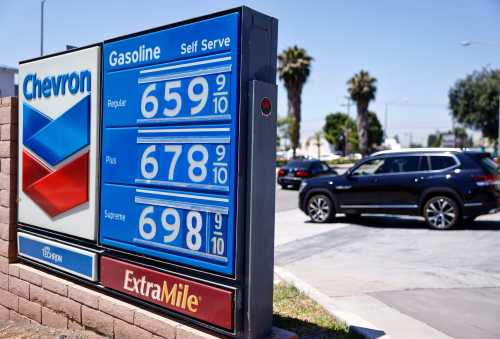
The United States and Israel began their attacks on Iran one month ago. Due to Iran’s retaliatory actions, the global oil market is suffering a supply shortfall larger than those in the 1973 and 1979 oil crises combined. The full brunt of the shock isn’t yet being felt in the United States, despite U.S gasoline prices reaching $4 per gallon for the first time since 2022.
On March 12, President Donald Trump wrote in a social media post that, “The United States is the largest Oil Producer in the World, by far, so when oil prices go up, we make a lot of money.” However, at the 10,000-person CERAWeek conference in Houston, from March 23 to 27, I heard no one spiking the football over high oil prices. Instead, discussions were much more concerned about how the conflict in Iran would play out in markets and shape the future of the global energy system. This piece is a combination of things I heard in formal events and private conversations, along with my own thoughts about what it all means one month into the conflict with Iran.
Iran and the Strait of Hormuz
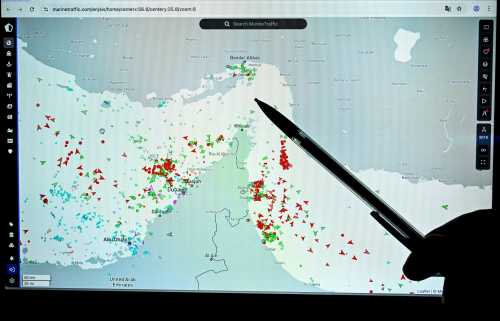
So far, Iran has demonstrated that it is willing and able to control the Strait of Hormuz, the single route into the Persian Gulf. One-fifth of the world’s supply of both oil and liquified natural gas (LNG) usually flows through the strait on its way to markets around the world, particularly to Asia. Energy security experts have always viewed blockage of the strait as a scary but unlikely scenario, given that mining or otherwise physically blocking the strait would also prevent Iranian oil from reaching the market. But Iran, retaliating against the U.S. and Israeli bombing campaign, has many ways to harass and damage vessels in the strait and the Persian Gulf, from small boats along its long shoreline to drones that can be launched from as far as 1,200 miles away. Iran has also attacked at least 22 vessels in the Persian Gulf since the war began to demonstrate its seriousness.
In this environment, no ship dares pass through the strait without Iranian permission, and insurance is very expensive or impossible to obtain. But since the strait is not physically blocked, Iranian oil is still reaching markets, in even larger quantities than before the conflict.
The Iranian regime is trying to gain further leverage by attacking its neighbors’ oil and gas infrastructure. Key attacks have damaged the Ras Laffan LNG complex in Qatar, the Yanbu terminal on the Red Sea in Saudi Arabia—the end of the Saudi pipeline that bypasses the strait—and Fujairah on the Gulf of Oman in the United Arab Emirates (UAE), where Emirati crude can be exported outside the strait. These attacks are intended to reduce the crude oil that can reach the market today and prolong the shortage in supply beyond the strait’s eventual opening, since damaged facilities will take months or years to repair.
A mess for the world’s energy system
Several sessions at CERAWeek grappled with the geopolitical challenges of the conflict. In conversation with Brookings Vice President Suzanne Maloney, former U.S. Defense Secretary General James Mattis described how the United States may have miscalculated the Iranian regime’s weakness after the protests of January 2026. The regime slaughtered thousands of people, with a documented total of about 7,000 and estimates of more than 30,000, demonstrating that it is willing to “kill its own people at an industrial level,” Mattis said. Rather than weakening the regime, the protests strengthened its grip on power, as fewer people are now willing to take to the streets. He said that he had a hard time identifying good options for the United States at this stage of the conflict.
The perceived risk in oil markets will change after the conflict; the world can’t go back to the time before the war. Saudi Arabia, the UAE, Qatar, Kuwait, Bahrain, Iran, and Iraq export most of their oil through the Strait of Hormuz, although Saudi Arabia and, to a lesser extent, the UAE and Iran have pipelines that avoid the strait. In all, the world is missing about 11 million barrels per day (mbd), or 11%, of crude oil supply, compared to the roughly 20 mbd that transited the strait before the conflict. Additionally, the oil market considers spare production capacity to understand supply risk, but nearly all the world’s spare capacity is in Saudi Arabia and the UAE. Finally, it’s difficult to imagine Saudi Arabia continuing to be the secure marginal supplier of oil so long as Iran can harass traffic through the strait. Militarily eliminating this ability would be very difficult indeed.
I found that in private meetings, industry and government leaders were more concerned about the conflict than they let on in public. The oil and gas industry is worried about physical damage to its facilities and economic damage to its whole industry. (Several facilities damaged by attacks are joint ventures with Western companies.) Other industries are worried about their resilience to the supply shock, and those that rely on oil or natural gas for fuel or feedstocks are concerned about their ability to obtain supply at all. Asia is taking the brunt of the disruption now, because that is where most Persian Gulf oil and LNG are sold. But high prices will be seen everywhere as the impact spreads. Many people I spoke with expressed surprise that oil prices are not higher than they are, expecting them to rise as the conflict grinds on and shortages are more widely felt.
Energy shortages and high prices are hitting Asia now, and Europe soon
Asia is getting most of the world’s attention right now, and for good reason. Asian countries are already taking drastic measures to reduce demand for natural gas that they receive as LNG and turning to coal for electricity generation. Pakistan has closed schools to save energy, and India is suffering from a shortage of liquefied petroleum gas used for cooking.
However, the conflict will also impact Europe. After Russia’s full-scale invasion of Ukraine and the subsequent cutoff of pipeline gas supply to Europe, the continent began to import more LNG to make up for the missing supply. Europe is now facing its second energy shock in four years, as nearly 20% of the world’s LNG supply is shut down. Some of that supply will be offline for years, as two of the 14 liquefaction trains at Qatar Energy’s Ras Laffan facility, representing about 3.5% of global capacity, were damaged by an Iranian missile strike. Rebuilding will take years.
Already, wholesale electricity prices in Europe are highest when natural gas sets the market-clearing price, and concerns about high energy prices reducing Europe’s economic competitiveness abound. European officials at the conference pointed out that natural gas generation is needed to balance renewable electricity production in many parts of Europe, but the rising price of LNG in the global market will exacerbate Europe’s challenges.
The global economy will suffer if the conflict continues
Many people I spoke with at the conference are anxious about inflation and recession. The United States is insulated from the natural gas crisis, since it has significant domestic production, and U.S. LNG facilities are already exporting as much as they can. But even as the world’s largest producer of oil and natural gas, the U.S. economy will see rising fuel prices. Oil is traded on global markets, so U.S. consumers pay global prices. Rising fuel prices flow through the price of goods and services throughout the economy. The inflation hit will be even greater for countries that also rely on imported LNG.
In addition to oil and gas, the global fertilizer supply is taking a huge hit. Natural gas is key to the production of nitrogen fertilizers like ammonia and urea; one estimate found that natural gas is 70% to 90% of ammonia production costs. Access to natural gas makes the Gulf region a good place for nitrogen fertilizer production—conservatively, about 12% of global supply is now lost due to the blockage of the strait. Additionally, the Gulf region is a key location for sulfur production, removed from “sour” oil and gas. Sulfur is an important nutrient itself and is a key ingredient in phosphate fertilizers. Between missing supply produced in the Gulf region and the rising price of natural gas contributing to higher costs elsewhere, fertilizer prices and shortages could be key ingredients for rising food prices in the coming months.
A long disruption could also cause a recession, as economic activity contracts to adjust to high fuel prices. Guessing at where prices could go and what price would create recession in various regions and globally was a topic in private discussions. Right now, the oil market is trading “financial barrels,” sales of future oil at future prices. Despite the large disruption, oil and LNG that were in vessels in transit and in storage when the conflict began are still cushioning many buyers. Once these temporary fixes are gone and market participants are dealing with actual shortages, we’re in uncharted territory with respect to oil and LNG prices.
No one knows exactly what to expect, but the range of prices that I heard discussed as recession-inducing seemed more than possible to me. One person in a private meeting summed up the situation thusly: “Can you outrun the dogs you unleashed?”
Author

Related Content
-
Acknowledgements and disclosures
The author would like to thank Ryan Beane for research assistance as well as Adam Lammon for editing and layout.
The Brookings Institution is committed to quality, independence, and impact.
We are supported by a diverse array of funders. In line with our values and policies, each Brookings publication represents the sole views of its author(s).
Commentary
加害者等へのメッセージ 痴漢盗撮は絶対にやってはいけません 痴漢盗撮は犯罪であり一瞬の行為が人生を台無しにしてしまいます それ以上に被害者は一生深い心の傷を負うことになるのです
加害者等へのメッセージ 痴漢盗撮は絶対にやってはいけません 痴漢盗撮は犯罪であり一瞬の行為が人生を台無しにしてしまいます それ以上に被害者は一生深い心の傷を負うことになるのです
ギャル痴漢逆さ撮り触られても声を出せない気弱なギャルを車内でサイレント強姦し続ける
今回の動画は立ち読み中に下半身ワレメくぱあクリ弄り痴漢されるの姿を逆さ撮りしたエロ動画です
痴漢逆さ撮り痴漢逆さ撮り
逆さ撮り顔出し激カワ本物を満員電車で逆さパンチラ盗撮痴漢縞々パンティに指を突っ込んでイカせる
逆さ撮り本物制服を電車で逆さパンチラガチ痴漢紺のサテンパンティに手が当たっちゃう
シリーズ初特典付きです 数日前の尾行中にスマホで収めた 逆さ撮りパンチラの縦動画を収録 誰もが振り返る透き通る白肌の爆乳長身美女 某駅で出会い逆さ撮りパンチラから執着が始まった 日に渡り快速車内で抵抗されながらも 押しの
ハメ撮りフェラ手コキオナニー巨乳女子校生美少女パイパン中出しハメ撮りフェラ手コキ巨乳人妻中出しフェラ手コキ
痴漢 逆さバイト中ののキャンペーンガールをセクハラ逆さ撮りパンチラコスチューム脱がせてブラジャーから乳首露出
盗撮ミニスカなポニテお姉さんをストーカーが電車で逆さ撮り痴漢 おまこねっとり弄られてぶっかけ射精
逆さ撮りヤバイやつお姉さん黒髪制服オムニバス美女ギャル美乳美少女女子風呂外国人座りパンチラスレンダー清楚胸チラしゃがみパンチラ
銭湯や温泉など男女が別れている施設が安だとは思いません鉄道かて痴漢対策や安全安心して女性に利用していただく旨で女性専用車両がありますしかしこのことから女性専用車両は安全安心とは言い難い女性ばかりだし撮り子により盗撮などの犯罪行為はないとも言い切れないし鉄道会社や警察政治家でもこのことは頭に常に入れておく必要はあります
この商品は成人向け商品です歳以上の方のみご購入できます条件により送料とは別に通信販売手数料がかかります 本州四国九州 お買上金額 円未満円 お買上金額 円以上無料 北海道沖縄
痴漢 逆さ撮り
リベンジとして背後についた際にはしっかりめくりに行きスカート内を確認することができています もちろんこの子もしっかり生です以上全て演出でありモデルによる演技です動画形式合計分数 分秒 映像サイズプレーヤープレーヤーにて動作確認しております当作品は盗撮風に演出したフィクションです 本商品には児童ポルノと定義される内容または違法性のある内容は含まれておりません 被
動画会社帰りのさんが電車で痴漢行為される一部始終を隠し撮りされた危険な犯罪映像がネット流出駅のホームで電車待ちしている所をお顔撮り電車に乗り込むとスカートの中を逆さ撮りしながら痴漢で陵辱していく様子を隠し撮り純白パンティを尻に食い込まされてバック状態という恥ずかしすぎる姿にされ半泣きになってしまうさんなのであった 収録時間分秒 痴漢記録日記痴漢映画館小
見られる可能性はあるでしょうね その人から逆さ撮りの映像などは貰っていませんということはを見なければ分かりませんし販売相手などを確認するために通信を確認す
満員電車で逆さ撮り痴漢満員電車で逆さ撮り痴漢車内放尿編コスプレイヤー逆さ撮り冬イベント編 めくりとおさわり
こんばんわ痴漢動画へようこそ管理人です今回の動画は巨乳にハマり中な痴漢男から満員電車痴漢で上下半身弄られる巨乳お姉さんエロ動画です駅から電車が走り出しアナウンスが流れている状態からすでに股間をお触り痴漢されていたお姉さんでしたがそんな痴漢され下半身姿を盗撮的な逆さ撮りアングルで拝見できたものですからエロ凄かったです
電車へ乗り込むの後ろ姿を拝見しただけでも制服スカート越しから肉厚そうなヒップ具合が伝わってくるほどでしたが電車へ乗るなり痴漢男から背後位置をキープされた末に制服スカート中を逆さ撮りされるもので
痴漢 逆さ撮り
April 1, 2026